


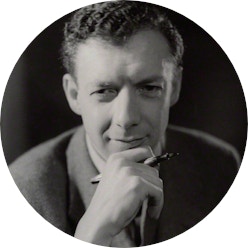
Benjamin Britten
22 de noviembre de 1913 - Lowestoft (Reino Unido) — 4 de diciembre de 1976 - Aldeburgh (Reino Unido)
Acerca de
Benjamin Britten : the British composer’s youth and education
Who was Benjamin Britten?
Born in 1913, Edward Benjamin Britten, later known as Baron Britten of Aldeburgh, is widely regarded as the most important British composer of the 20th century. A gifted pianist and conductor, Britten transformed contemporary classical music and revitalized the operatic world. Among his most celebrated works are the groundbreaking opera Peter Grimes (1945), the haunting War Requiem (1962), and the beloved educational piece The Young Person’s Guide to the Orchestra (1945).
Early life and musical influences
Britten was born into a music-loving family. His mother, an amateur singer and pianist, introduced him to music from a young age, while his father—a dentist in the coastal town of Lowestoft, on England’s North Sea coast—famously banned radios and gramophones at home to encourage the appreciation of live music. The Britten household frequently hosted musicians, providing young Benjamin with a rich musical environment to grow up in. He composed his first piece at the age of five. At fourteen, he met Frank Bridge, a composer and violist whom he deeply admired and who would go on to become his teacher and mentor. Their close relationship would have a lasting impact on Britten’s musical development. In 1929, Britten entered the Royal College of Music in London, where he studied composition and piano. Inspired by the innovations of Arnold Schoenberg, he composed Sinfonietta, Op. 1, in 1933—his first published work, written just a year after his graduation. Britten had hoped to study further with Alban Berg in Vienna, but the school’s administration discouraged the idea, warning his parents against the “dangerous” influence of the modernist composer.
Early compositions and first successes
Britten quickly achieved public success. In 1934, he reworked themes he had composed as a child into Simple Symphony—a charming homage to youth that revealed his distinctive voice in all its clarity. That same year, his Fantasy Quartet for oboe and strings, written to represent England at the Florence Festival, was also well received. Major works soon followed: Les Illuminations (based on poems by Arthur Rimbaud) and the Serenade for Tenor, Horn, and Strings both established Britten’s lyrical and evocative style. Alongside these concert works, he also began composing for film and radio. From 1935 to 1939, he worked for the GPO Film Unit (part of the British Post Office), where he collaborated with poet W. H. Auden. Their partnership yielded several politically-charged works, including the song cycle Our Hunting Fathers. It was during a 1939 trip to the United States with Auden that Britten met Peter Pears, the tenor who would become his life partner and most important musical collaborator. Their relationship, both personal and professional, would shape Britten’s creative output for decades. In 1937, Britten made his first major international breakthrough with Variations on a Theme by Frank Bridge, premiered at the Salzburg Festival. A year later, he received a commission from Jean Cocteau to compose music for the play The Eagle with Two Heads, further expanding his reputation in Europe.
Benjamin Britten’s body of work
Britten and opera
As World War II loomed, Britten and Pears chose self-imposed exile in the United States. There, Britten composed his first operetta, Paul Bunyan, for students at Columbia University, with a libretto by W. H. Auden. Around this same time, he met conductor Serge Koussevitzky, who commissioned what would become Britten’s first major opera. After returning to England in 1942, he had completed Peter Grimes by 1945. From its very first premiere, it took audiences by storm: the opera was an instant success that marked a turning point in British music history, establishing Britten as the leading voice of modern English opera. Rather than continue with large-scale “grand opera,” Britten shifted his focus to chamber opera, which he believed was more accessible and practical to stage. In 1946, he co-founded the English Opera Group, where he served as both conductor and composer. His mission was to revive English opera with works that were artistically ambitious yet performable on a smaller scale. This vision came to life through a series of acclaimed operas: The Rape of Lucretia (1946), Albert Herring (1947), The Turn of the Screw (1954), A Midsummer Night’s Dream (1960), and Death in Venice (1973). Each new opera solidified Britten’s status as a master dramatist and composer who gave English opera a new and lasting identity.
Orchestral, vocal, and chamber music
Though Britten is primarily known for his operas, his body of work outside the genre is no less extraordinary. His orchestral, chamber, and vocal compositions are characterized by the same daring creativity and technical brilliance. One of his most beloved works, The Young Person's Guide to the Orchestra (1945), goes far beyond its educational purpose. With remarkable clarity and color, Britten uses this piece to explore the full palette of orchestral sound, offering both entertainment and a lesson in orchestration. His Violin Concerto (1939), written on the eve of World War II, stands out for its emotional intensity. The piece pits the violin’s lyrical virtuosity against an undercurrent of unsettling dissonance, creating a sense of unresolved tension that mirrors this turbulent time. Britten’s chamber music is equally refined. His three string quartets, Sonata for Cello and Piano, and works for solo instruments—such as the Suite for Solo Cello (1964, written for Mstislav Rostropovich) and the Suite for Harp (1969)—exemplify his gift for idiomatic writing for every instrument, while at the same time preserving emotional depth and structural elegance. In the vocal realm, Britten created some of his most touching and original works. A Ceremony of Carols (1942), composed during a transatlantic voyage, offers a fresh, luminous take on Christmas through simple melodies and medieval texts, evoking serenity amid wartime chaos. On the other end of the spectrum, his monumental War Requiem (1962) brings together soloists, chorus, orchestra, and the haunting poetry of Wilfred Owen to deliver a deeply personal and political statement on the horrors of war. It's a work of profound humanism, at once spiritual and unflinching. Across all genres, Britten stands out as a composer of rare vision—an artist comfortable in the unconventional, emotionally direct, and technically fearless.
Britten on medici.tv
Britten’s music—from his operas to intimate chamber pieces—shines in the hands of today’s top artists and musicians, and medici.tv offers the perfect way to discover (or rediscover) his legacy. As the largest classical music streaming platform, medici.tv features a rich selection of Britten’s works in exceptional performances. You can enjoy legendary recordings such as Britten and Rostropovich together in Aldeburgh (1968), performing works by Tchaikovsky and Britten himself, or revisit his 1964 and 1970 concerts, where Britten conducts Mozart and Mendelssohn with extraordinary finesse. Whether you're a longtime fan or new to his music, medici.tv immerses you in Britten’s world, and with all its emotional intensity, buckle up and hold on for the ride!
Benjamin Britten’s legacy and influence on 20th-century music
Is this traditional? Or is this modern? Who says it can’t be both?
Having spent almost his entire life in England, Britten’s music reflects a deep connection to these English roots—its history, landscapes, and literary heritage—while also embracing a forward-thinking sensibility. Unlike many of his radical contemporaries, Britten resisted the dogmas of the avant-garde. He avoided pure atonality and instead revitalized classical forms with clarity, precision, and expressive depth. His influences ranged from Purcell, English folk music, and Renaissance choral traditions to Berg, Debussy, Mussorgsky, and Verdi. In his vocal works, he often drew on medieval poetry and plainchant, entrusted to children’s choirs or solo voices, blending the sacred and the secular, the traditional and the modern. Britten preferred chamber opera over grand opera, believing its intimacy made it more sincere and communicative; his philosophy was that music is made to be shared, accessible to all, and rooted in community. Later on, a 1956 trip to Bali introduced Britten to the gamelan and had a lasting impact on his works. The influence of the gamelan—with its shimmering textures, repeating patterns, and ritualistic feel—can be heard in works like The Prince of the Pagodas (1957) and Curlew River (1964), which combine Western structure with Eastern sensibility. Above all, Britten was an outstanding melodist. In works like Peter Grimes, A Ceremony of Carols, and War Requiem, he restored the expressive power of the English language in music, making it sing with clarity, poetry, and purpose. Britten’s influence continues today. Composers such as Thomas Adès, whose opera The Tempest clearly echoes Britten’s dramatic instinct, carry forward today his legacy of innovation rooted in tradition. Free, original, and deeply human, Britten redefined what it meant to be a composer in the 20th century.
Pacifism in his work
“If you really hear it [Britten's music], and don't just listen to it superficially, you become aware of something very dark.” -Leonard Bernstein
A contemporary of two world wars and homosexual at a time when it was still a crime, Britten was confronted with violence and human failings at an early age. He refused to participate in the military and fled to the United States with his friend and collaborator, poet W. H. Auden. It was Auden who encouraged him to live openly as a homosexual when he met his lifelong partner, the tenor Peter Pears, in 1937. This orientation is reflected in several lyrical works, such as Peter Grimes, Billy Budd, and his final opera Death in Venice, based on Thomas Mann. Britten composed War Requiem for the 1962 inauguration of Coventry Cathedral, rebuilt near the ruins of the one bombed in 1940. It was a response to “his terrible anguish at the genius that men have for regularly slaughtering each other, since the beginning of time and no doubt for all time.” He wrote to his sister, “I hope it will make people think a little.” As if to punctuate his words, the following year he composed his Cantata misericordium (Cantata of the Merciful), inspired by the biblical parable of the Good Samaritan, which refers to “love thy neighbor.” From his private life to his musical life, pacifism guided Britten and shines through from within his work.
Notable artistic collaborations
Throughout his career, Britten surrounded himself with major artistic figures who influenced the shape and sound of his music. Starting with poet W. H. Auden, with whom he collaborated closely in his early days, most notably on Our Hunting Fathers (1936) and the operetta Paul Bunyan (1941). More than a mere collaborator, Auden encouraged Britten to unapologetically assert his uniqueness despite living in a conservative England. But it was above all his relationship with the tenor Peter Pears, his lifelong companion, that marked his entire œuvre. A muse and co-founder of the Aldeburgh Festival, Pears premiered many of Britten’s works: Peter Grimes, The Turn of the Screw, Death in Venice, and Les Nocturnes and Les Illuminations. Pears' exceptional voice is the reason why his interpretations of Britten’s operas are considered some of the best (if not the best). But this wasn’t all. Later on, Britten expanded his circle and created musical partnerships with world-class artists such as Mstislav Rostropovich, for whom Britten composed his Three Suites for solo cello and the Sonata for cello and piano (1961), and Dietrich Fischer-Dieskau, who premiered Songs and Proverbs of William Blake (1965) and participated in the War Requiem. Britten enjoyed collaborations with guitarist Julian Bream, who inspired the composition of Nocturnal after John Dowland (1963), a landmark work in the 20th-century classical guitar repertoire. Britten also sought out mezzo-soprano Janet Baker, who gave a moving performance in the role of Phaedra (1946), and contralto Kathleen Ferrier, who created the role of Lucretia in The Rape of Lucretia (1975).