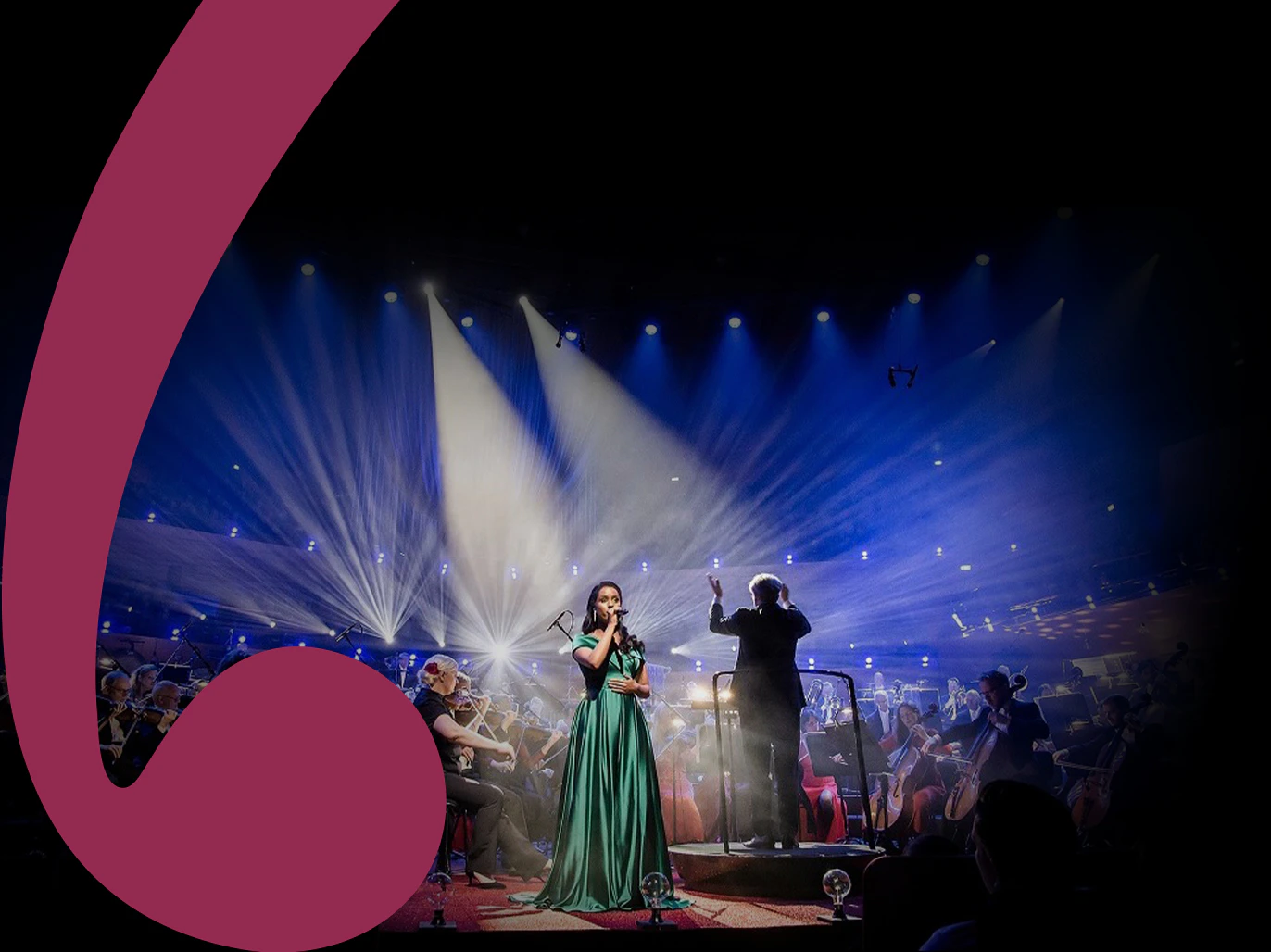
Discover here a selection of the best movie soundtracks which have left a mark on the history of cinema.
What we see onscreen is undeniably central to the moviegoing experience, but what we hear can also push a movie into the upper ranks of our favorites. From the chaos of a battlefield to a creepy, creaky old house, to the swell of the strings that accompany the kiss we’ve been waiting for, nothing heightens our feelings quite like music.
Even films during the “silent era” often used music with a live orchestra in tow: what would the iconic staircase scene be in Battleship Potemkin without composer Edmund Meisel’s rousing musical accompaniment? Certain composers began dedicating their careers entirely to film music, and as cinema continued to grow as a medium, more and more filmmakers incorporated existing works from the classical canon.
From classical music needle drops to entirely original scores, the use of classical and original music in cinema has yielded some unforgettable results.
Music and film: a perfect recipe for storytelling
How do we know right away that the great white shark in Jaws is preparing to strike before we see him? Why can’t we help but smile when thinking about Frodo and Samwise in the Shire? Why do we tear up when Simba sees his father Mufasa in the clouds?
The answer is simple: music.
Even what we refer to as “silent films” aren’t entirely silent; early movies still used original music and scores to accompany the story. Without a single spoken word, movies like Metropolis, The Passion of Joan of Arc and The Cabinet of Dr. Caligari transport us into the past (or the future), and their original music is an integral part of that immersive experience.
After dialogue was officially introduced to film with 1927’s The Jazz Singer, the musical genre further broadened the horizons of what music could narratively accomplish onscreen. Films like Singin’ in the Rain, West Side Story, and The Umbrellas of Cherbourg put music in the foreground by featuring original scores and having their characters sing and dance.
By the 1970s, directors like Stephen Spielberg and George Lucas ushered cinema into the blockbuster era that we know today, and a larger-than-life film needs a larger than life score. To this day, Darth Vader’s “Imperial March” from Star Wars or Indiana Jones’s swashbuckling theme remain as recognizable to wide audiences as Beethoven’s Fifth.
The names behind the notes: cinema’s greatest composers
For many of today’s classical music fans, their favorite composer may not necessarily be Bach or Tchaikovsky, and they instead might cite the composers behind their favorite film scores. While the list of film composers is endless, a few select names have risen to the ranks of cinematic and musical immortality.
Otherwise known as the “father of film music,” composer Max Steiner emigrated from Austria to the United States and composed over 300 scores for major Golden Age films including King Kong, Gone with the Wind, and Casablanca. He was nominated for 24 Academy Awards and won the statue three times.
During the 1960s, Italian filmmaker Sergio Leone became so enamored with the American West that he created an entire cinematic subgenre known as the spaghetti Western. Closeups of Clint Eastwood scowling in the middle of the desert are already enough to strike fear and awe into the hearts of viewers, but the original scores of Leone’s countryman Ennio Morricone ratchet up the drama even further. A Fistful of Dollars and Once Upon A Time in the West are full of memorable musical moments, but it is Morricone’s theme for The Good, the Bad, and the Ugly that has arguably become his most famous. The combination of piccolo, electric guitar riffs, and howling vocals (meant to evoke the sound of coyotes) is now synonymous with the genre.
When it came time to adapt the Lord of the Rings series, Canadian composer Howard Shore was chosen to write the original score. He wrote over 50 leitmotifs to represent the individual characters, cultures and places of Middle Earth. The orchestration also calls for a 96-piece orchestra and a 100-person choir that sings in original languages invented by J. R. R. Tolkien himself. For his efforts, Shore won three Academy Awards, two Golden Globes, and three Grammys.
John Williams and Hans Zimmer: a league of their own
If there are two composers who have come to define the art of the film score, they are none other than American John Williams and German Hans Zimmer.
With 54 Academy Award nominations and five wins to his name, John Williams is the second-most nominated artist in the award’s history after Walt Disney. Over his seven-decade career, John Williams has composed some of the most famous pieces of film music. Known for his use of romanticism, impressionism, and atonal music, Williams has scored some of the most lucrative franchises in film history including Star Wars, Jurassic Park, and Harry Potter. In the words of director Stephen Spielberg, without John Williams, “bikes don’t really fly, nor do brooms in Quidditch matches… There is no Force, dinosaurs do not walk the earth. We do not wonder, we do not weep, we do not believe.”
Known for his collaborations with Ridley Scott and Christopher Nolan, Hans Zimmer brought film scores, and the blockbuster, into the 21st century by combining traditional orchestrations with electronic music. From historically inflected adventures like Gladiator or Pirates of the Caribbean to modern, contemplative epics like Interstellar or The Dark Knight, rather than giving each character or place a musical identity like Shore or Williams, Zimmer’s immersive scores plunge the viewer directly into the universe of the film. Zimmer’s first Academy Award came for Disney’s The Lion King, his first ever animated film. His second came almost thirty years later for Denis Villeneuve’s Dune.
Scene-stealing symphonies: classical music in film
Sometimes, directors don’t need to start from scratch to create an iconic musical moment.
A “needle drop” is an industry term referring to the use of a preexisting piece of music in a movie, television show, or other forms of audiovisual content, and many filmmakers have turned to classical composers for inspiration.
Director Francis Ford Coppola breathes new life into Wagner’s Ring cycle in his Palme d’Or-winning Apocalypse Now. In this Vietnam epic, a group of American soldiers take to the skies via helicopters to the iconic rhythm of the “Ride of the Valkyries.”
In the Oscar-winning Silence of the Lambs, Anthony Hopkins embodies a vicious serial killer who also happens to be highly cultivated. His cannibalistic tendencies and brutal murders contradict his soft spoken nature and fondness for humming Bach’s Goldberg Variations.
The Piano Teacher follows a repressed pianist who lives with her mother and must navigate an extreme desire for one of her students. Director Michael Haneke is an avid Schubert fan, and Erika, played by Isabelle Huppert, is often shown practicing his pieces, notably the haunting Piano Trio No. 2 in E-flat.
More recently, in Tár, actress Cate Blanchett plays the enigmatic titular conductor, consumed by the pressures of an upcoming live recording of Gustav Mahler’s Symphony No. 5.
Classical music in film: the Kubrick repertoire
Does Berlioz make you think of a haunted hotel in snowy Colorado? Perhaps it takes just one note of Richard Strauss’s most famous tone poem to whisk you off to outer space?
Considered one of the most influential filmmakers of all time, Stanley Kubrick understood the emotional potential of both film and music, so it is no surprise that his filmography extensively features classical music.
The opening theme of The Shining, played during aerial shots of protagonist Jack Torrance driving to his caretaker job, is an arrangement of the “Dies irae” theme from Hector Berlioz’s Symphonie Fantastique. By including this haunting work while showing a seemingly normal road trip amid a scenic mountain backdrop, Kubrick cues us into the gruesome fate waiting for Jack and his family at the Overlook Hotel.
In A Clockwork Orange, after a violent evening out on the town, protagonist Alex DeLarge proclaims that the only thing that could make the night better is a bit of “the old Ludwig van,” and proceeds to play a recording of Beethoven’s Symphony No. 9. What comes next is a montage of harrowing images offset by the lively strings of the second movement, a fitting representation of the perverse pleasure Alex takes in the suffering of others.
Kubrick’s most famous use of classical repertoire, and perhaps the most famous example of classical music in film, is in his out-of-this-world 2001: A Space Odyssey. Could Richard Strauss ever have predicted in 1897 that Also sprach Zarathustra would become the unofficial soundtrack to the cosmos? Since the release of 2001, the work has become nearly synonymous with Kubrick, and projects that take place in outer space often cite Zarathustra as a nod to the filmmaker.
Enjoy the best of classical music in cinema with medici.tv
This detailed playlist brings you the best of what classical cinema has to offer. Immerse yourself in lively concerts featuring your favorite film soundtracks (and even some appearances by the composers themselves), and rediscover the classical works that have inspired some of our greatest filmmakers.
Because whether we’re in the Wild West or in a galaxy far, far away, there will always be music.