


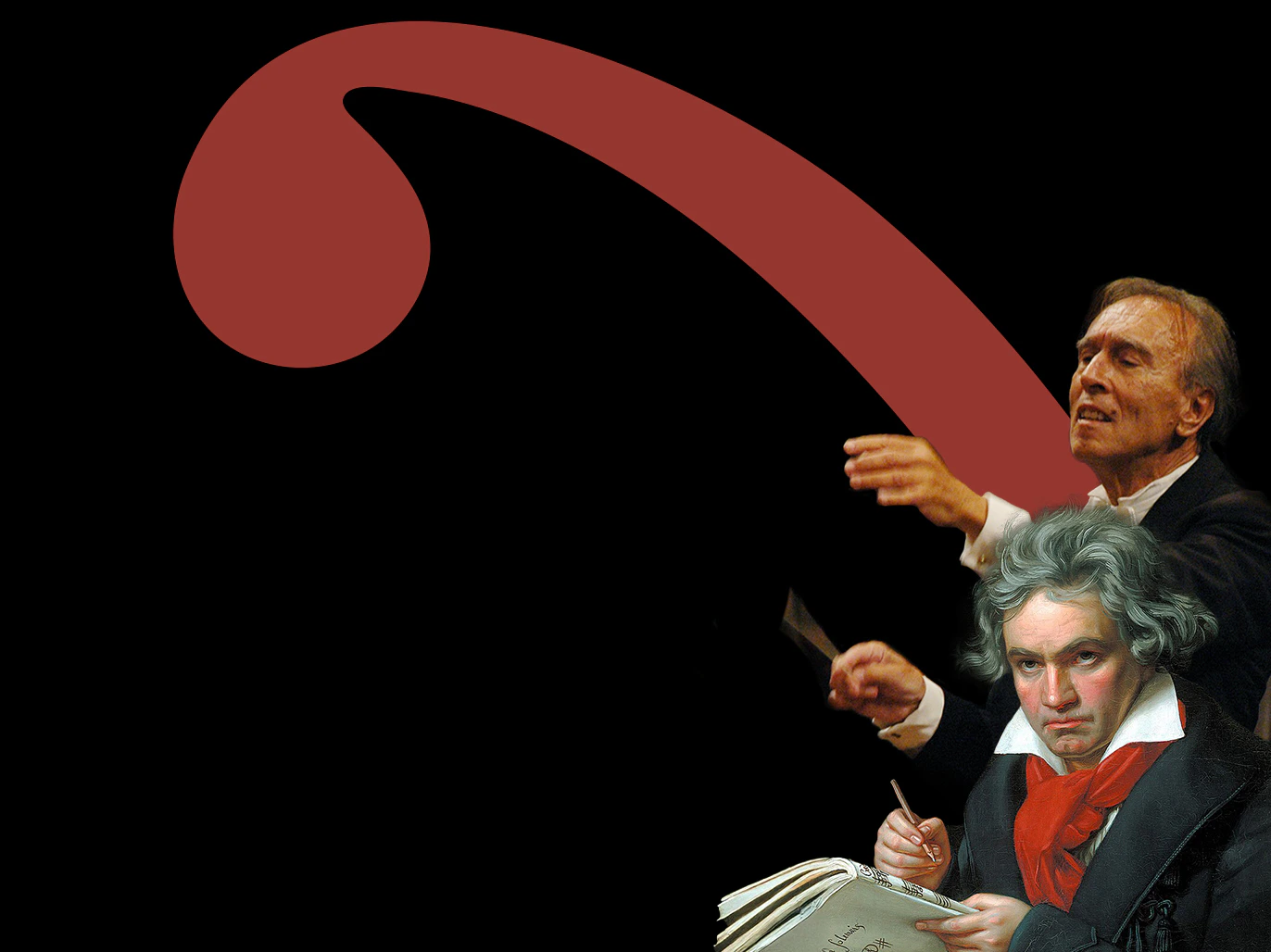
Claudio Abbado: la integral de las sinfonías de Beethoven
With the Berliner Philharmoniker
0 videos
"With Beethoven, you never stop learning…"
…stated the great Claudio Abbado, who always found new things to bring out in the symphonies of the master from Bonn (1770-1827). Although Abbado was the director of La Scala in Milan for fifteen years, which earned him a reputation as an outstanding opera conductor, he was also intimately familiar with the German and Viennese repertoires after studying with Hans Swarowsky in Vienna. In the Austrian capital, the young Abbado also performed in choruses, which meant rehearsals with the great conductors of the time, Bruno Walter, George Szell and Herbert von Karajan.
In 1989, he succeeded Karajan at the head of the Berlin Phil, a position he held until 2002. With that legendary orchestra, he made a second recording of the complete Beethoven symphonies (Deutsche Grammophon, 2000) and performed the complete cycle again at the National Academy of Santa Cecilia in Rome in 2001. It is this memorable series we see here, performed before an enthusiastic Roman audience, with the exception of the Ninth Symphony, which was filmed in Berlin.
This monument in the history of Western music, to which maestro Abbado always felt a deep attachment, was composed by Beethoven in less than a quarter of a century from 1799 to 1823 — a period which nonetheless covers the greater part of the composer’s life, with the First Symphony coming at 31 and the Ninth at 54. The large-scale, epoch-making achievements of Beethoven put an end to the era of symphonists like Haydn, who composed up to a hundred symphonies. From then on it became more standard for prominent composers to stop around ten symphonies, each stamped with its own personality.
Although Ludwig van Beethoven's symphonies tower over the canon of Western music, they remain familiar and immediately accessible to most listeners, a remarkable example of high art that appeals to a wide audience. Their unique stature helps explain why they have been widely used for purposes both political (the "Ode to Joy" from the Ninth Symphony is the official anthem of the European Union) and commercial (countless advertisements), as well as in films (A Clockwork Orange or The King's Speech, among many others).
As symbols of freedom and statements of artistic independence, Beethoven’s symphonies are among the fullest and most soul-stirring expressions of belief in the dignity of human beings, who recognize themselves in each of them. That is how Abbado conducts these timeless works: with a majesty that places the ineffable and the sublime before easy gratification. And with to the incredible sonorities that the conductor elicits from the legendary Berliner Philharmoniker, beauty itself becomes a victory not just sublime, but also deeply human.


