
Explore the continent with the Berliner Philharmoniker Europakonzert Collection
and don't miss the 2024 edition with maestro Daniel Harding, live May 1st!


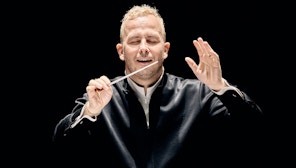

Friday, April 26, 2024 4:00 PM
Yannick Nézet-Séguin conducts Wagner's Die Walküre
Concert version with Stanislas de Barbeyrac (Siegmund), Elza van den Heever (Sieglinde), Tamara Wilson (Brünnhilde) — Rotterdam Philharmonic Orchestra

Wednesday, May 1, 2024 9:00 AM
The 2024 Berliner Philharmoniker Europakonzert in Tsinandali, Georgia
With Daniel Harding and Lisa Batiashvili
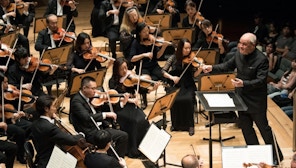
Friday, May 3, 2024 11:30 AM
Hans Graf conducts Tchaikovsky and Prokofiev — With Benjamin Schmid
Singapore Symphony Orchestra
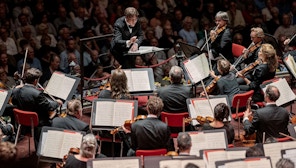
Saturday, May 4, 2024 6:00 PM
Klaus Mäkelä conducts Bruckner's Symphony No. 5
Royal Concertgebouw Orchestra

Sunday, May 5, 2024 4:00 PM
Tabea Zimmermann, Jean-Guihen Queyras, and the Belcea Quartet perform Brahms's String Sextets
Konzerthaus Dortmund
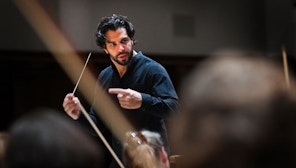
Saturday, May 11, 2024 6:00 PM
Domingo Hindoyan conducts Roussel, Alberga, and Shostakovich — With Alim Beisembayev
Royal Liverpool Philharmonic Orchestra

Friday, May 17, 2024 6:30 PM
The Joey Alexander Trio in Paris
Piano Jazz Sessions at the Fondation Louis Vuitton

Thursday, May 23, 2024 6:30 PM
Shahin Novrasli in Paris
Piano Jazz Sessions at the Fondation Louis Vuitton
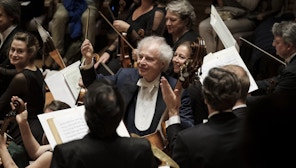
Sunday, May 26, 2024 4:00 PM
Sir András Schiff performs and conducts Brahms and Haydn
Chamber Orchestra of Europe

Wednesday, May 29, 2024 6:00 PM
Robin McKelle performs a tribute to Ella Fitzgerald
Théâtre de Poissy


